
Mobile Crane Safety 101 starts with your pre-operation inspection. It requires thorough ground condition assessment and demands proper rigging techniques. A solid approach to Mobile Crane Safety 101 depends on clear communication and includes emergency response planning. This protects every worker on site and prevents costly equipment damage, keeping your project on schedule. This guide covers Mobile Crane Safety 101 completely. You will learn every essential protocol and apply these steps immediately.
Table of Contents
- 1. Pre-Operation Inspection
- 2. Ground Condition Assessment
- 3. Rigging and Load Attachment
- 4. Operational Safety Practices
- 5. Operator Qualifications and Training
- 6. Daily and Shift Change Protocols
- 7. Emergency Response Procedures
- 8. Regulatory Compliance
- 9. Continuous Safety Improvement
- 10. Conclusion
- Our Business Partners
1 Pre-Operation Inspection
The pre-operation inspection forms the foundation of Mobile Crane Safety 101. This inspection happens before the crane moves and before it lifts. Never skip this inspection for Mobile Crane Safety 101. Never rush the process, follow a written checklist, and document every inspection result properly.
Visual Walkaround Inspection
Walk around the crane completely. Look at the boom for cracks, dents, and rust. Check the cables for fraying, kinks, or broken wires. Inspect the hook for deformation and latch function. Ensure the outriggers are free from damage or leaks. Look at the tires for proper pressure, tread wear, and cuts. These visual checks are fundamental basics of safety on site.
Fluid Level Checks
Check all fluid levels daily, including engine oil, hydraulic fluid, transmission fluid, coolant, and brake fluid. Low fluid causes equipment failure and safety hazards. Top off fluids as needed, record additions, and look for leaks under the crane. Address leaks immediately to ensure stable operation.
If you are still finalizing equipment for your site, it is highly recommended to read our comprehensive guide to choosing the right mobile crane before proceeding with operations.
Control and Instrument Testing
Test every control before operation. Test the boom raise and lower functions, swing functions, and hoist mechanisms. Ensure the emergency stop button, horn, alarm systems, and lights work. Ensure all controls respond properly and return to neutral while listening for unusual noises.
Load Moment Indicator Verification
Verify the LMI system operates correctly. Turn on the display, check for error codes, and test the LMI with a known weight. Ensure alarms sound at proper thresholds. Never operate with a faulty LMI; replacing or repairing it immediately is critical for Mobile Crane Safety 101.
2 Ground Condition Assessment
Ground conditions determine crane stability. Assess ground conditions before setup, after rain, or after any disturbance. Mobile Crane Safety 101 demands this assessment to avoid tip-overs.
Bearing Capacity Testing
Test the ground bearing capacity using a penetrometer or plate load test. Soft ground needs improvement, crane mats, or outrigger pads. Sloped ground requires leveling and engineering review to provide maximum safety.
Outrigger Placement
Position outriggers on solid ground, avoiding fill material, utility covers, or asphalt edges. Extend outriggers fully and evenly. Level the crane using outrigger jacks and check it on multiple axes. Proper outrigger placement supports Mobile Crane Safety 101.
3 Rigging and Load Attachment
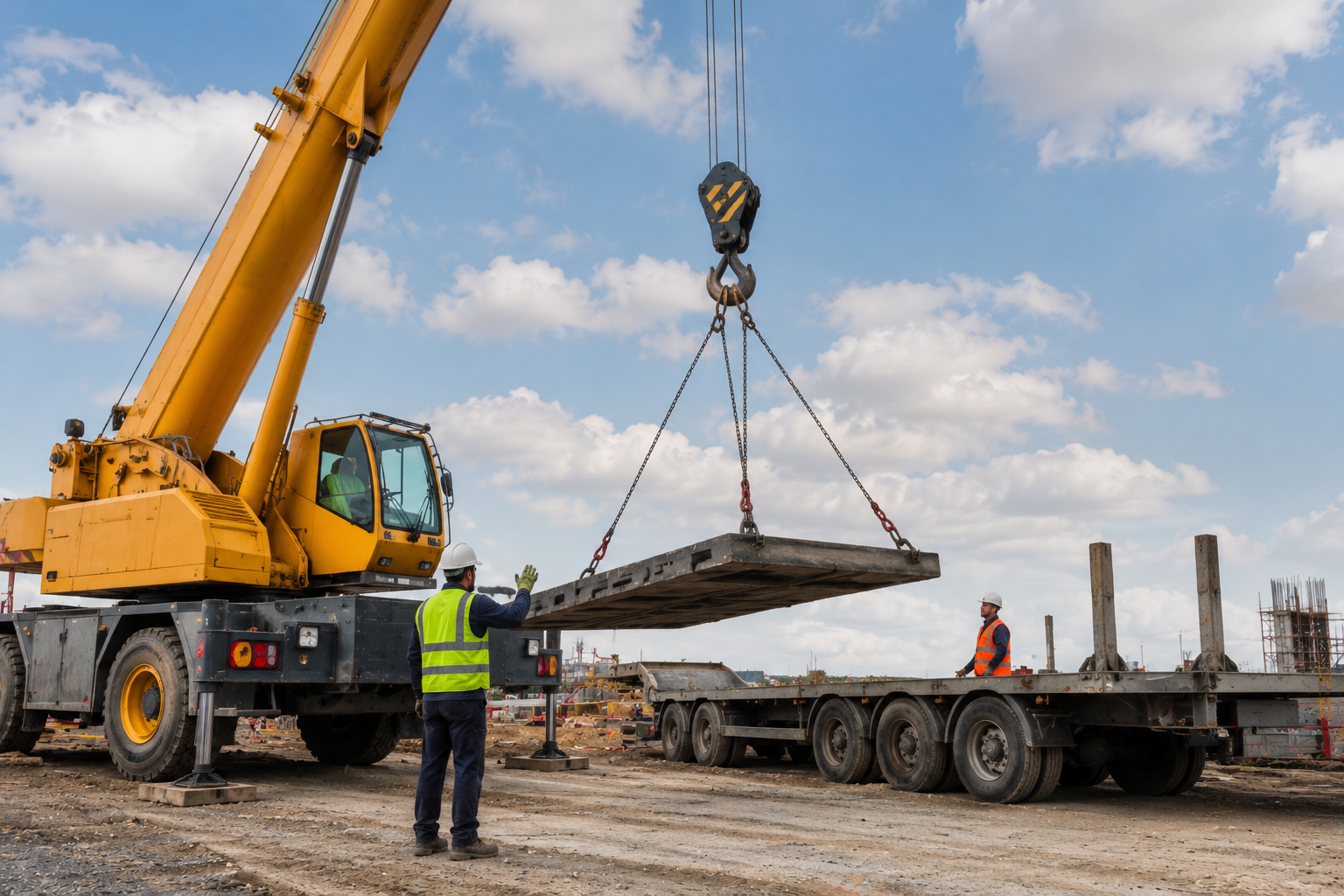
Proper rigging connects your load safely. Improper rigging causes load drops and personnel injury. Follow these rigging protocols for Mobile Crane Safety 101 to secure every lift.
Rigging Equipment Inspection
Inspect all rigging before use. Check wire rope slings for damage, synthetic slings for cuts or abrasion, and chain slings for stretch or cracks. Inspect hooks for throat opening and turnbuckles for thread damage. Destroy damaged rigging completely; never reuse it.
Load Weight Calculation
Calculate the total load weight accurately. Include the item weight, rigging weight, hook weight, and attachments. Verify weight with shipping documents or certified scale measurements. Accurate weight calculation is vital for Mobile Crane Safety 101.
Sling Angle Effects
Sling angles affect rigging capacity. A vertical sling holds full capacity, while a 30-degree sling holds very little capacity. Calculate the actual sling tension and use rigging with higher capacity for angled lifts. Use spreader bars to improve angles.
For specialized site duties where heavy cranes cannot reach, consider using an electric mini scissor lift to elevate workers safely for rigging inspections.
4 Operational Safety Practices
Safe operation requires constant attention, clear communication, and controlled movements. These practices define Mobile Crane Safety 101 on every active site.
Lift Planning
Plan every lift before execution. Write a lift plan for critical lifts identifying the load path, landing zone, and potential hazards. Review the plan with the team and adjust for changing conditions.
Communication Protocols
Establish clear communication methods using hand signals or radios. Use a designated spotter for blind lifts. Verify equipment works before each shift and establish emergency stop signals. Clear communication is essential for Mobile Crane Safety 101.
Wind and Weather Limits
Monitor wind speed continuously. Stop operations in heavy rain, lightning conditions, fog with low visibility, or extreme temperatures. Weather monitoring supports Mobile Crane Safety 101 and keeps the crew safe.
5 Operator Qualifications and Training
Qualified operators ensure safety and trained personnel prevent accidents. Verify credentials before assigning operators for Mobile Crane Safety 101.
Certification Requirements
Operators need valid certification that follows OSHA, NCCCO, and local requirements. Verify expiration dates and ensure the certification covers the specific crane type. Keep documents on site.
Training Programs
Provide site-specific and equipment-specific training. Train on communication procedures, traffic patterns, and emergency plans. Conduct refresher training annually; proper training reinforces Mobile Crane Safety 101.
6 Daily and Shift Change Protocols
Safety continues between shifts and from day to day. Follow these protocols for Mobile Crane Safety 101.
Operator Handoff Procedures
Operators must conduct shift handoffs. Document crane status, issues, repairs, and replaced parts. Review previous shift logs and walk around the crane together to discuss site changes.
End of Shift Inspection
Conduct an end of shift inspection to check for new damage or fluid leaks. Lower the boom to a safe position, apply the parking brake, and secure access points. End of shift checks are part of Mobile Crane Safety 101.
7 Emergency Response Procedures
Emergency response saves lives and minimizes damage. Prepare for emergencies before they happen for Mobile Crane Safety 101.
Emergency Stop Activation
Know the emergency stop location and function. Activate it immediately for uncontrolled loads, power line contact, or personnel injury. Emergency stop activation is key to Mobile Crane Safety 101.
Crane Tipping Protocol
Crane tipping is a critical emergency. Sound the alarm, evacuate the area, and shut down the crane if possible. Do not attempt to stabilize the crane manually. Tipping protocols are essential for Mobile Crane Safety 101.
Always ensure your foundational decisions align with proper guidelines, as detailed in our comprehensive guide on choosing the right mobile crane to prevent tipping risks from the start.
8 Regulatory Compliance and Documentation
Regulations require specific practices to prevent penalties. Documentation proves compliance. These elements support Mobile Crane Safety 101.
OSHA Standards Compliance
Follow OSHA 1926 Subpart CC, operator certification rules, and rigging inspection guidelines. Keep required records up to date. OSHA compliance is mandatory for Mobile Crane Safety 101.
Incident Reporting
Report all incidents, near misses, and equipment damage immediately. Include witness statements and photographs, and submit reports to management and regulatory bodies.
9 Continuous Safety Improvement
Safety improves with experience and feedback. Implement continuous improvement for Mobile Crane Safety 101.
Safety Meetings & Equipment Modernization
Conduct daily safety briefings and weekly reviews. Discuss recent incidents and worker concerns. Additionally, upgrade older equipment with proximity detection and load monitoring. For elevated personnel safety, integrating equipment like the TYPHON XFLEX-2031EM 1.2 Ton Electric Mini Scissor Lift modernizes your fleet’s safety capabilities.
10 Conclusion
Your workers depend on Mobile Crane Safety 101. Your reputation and your project timeline rely on strict adherence to these rules. Train every worker, enforce these protocols without exception, and review them regularly.
Safety is not optional; it is your primary responsibility. Start with your next lift and apply Mobile Crane Safety 101 immediately. Protect your team, your equipment, and your project.
11 Our Business Partners
We believe in collaborating with the best in the industry to bring unmatched value to our construction projects. Watch the video below to learn more about our operational standards and partnerships.


[…] site safety through routine checks matches the core values highlighted in our Mobile Crane Safety 101 essential protocols […]