

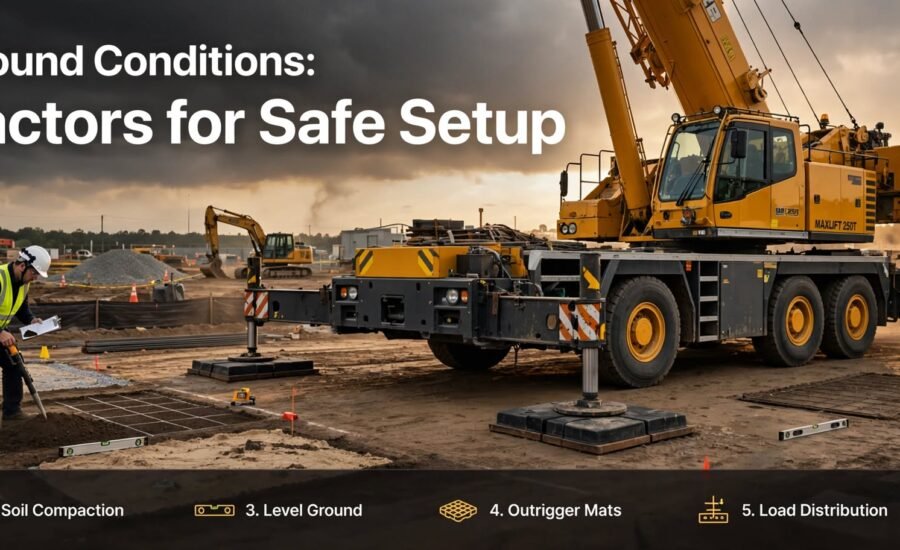
Mobile Crane Ground Conditions determine setup safety. These conditions affect crane stability. These conditions prevent tip-overs. These conditions protect operators. These conditions protect ground crews. These conditions protect equipment. These conditions require proper assessment. These conditions require testing. These conditions require documentation. These conditions vary by site. These conditions change with weather. These conditions demand constant attention. This guide covers Mobile Crane Ground Conditions thoroughly. This guide gives you 6 critical factors. Proper assessment is not optional. These conditions are the foundation of safe lifting. Read this Mobile Crane Ground Conditions guide completely. Apply these lessons on every job.
Table of Contents
1 Why Mobile Crane Ground Conditions Matter
Mobile Crane Ground Conditions support the entire machine. A crane weighs hundreds of tons. Outriggers concentrate this weight. Small pads carry massive loads. Weak ground fails under pressure. Ground failure causes crane tipping. Crane tipping causes injuries. Crane tipping causes deaths. Crane tipping destroys equipment. Crane tipping stops projects. Poor ground conditions cause these outcomes. Proper assessment prevents them.
The Physics of Ground Pressure
Crane weight spreads through outriggers. Each outrigger carries a share. Outrigger pads concentrate the load. Ground pressure increases dramatically. Soft ground cannot support this pressure. The outrigger sinks into the soil. The crane tilts toward that corner. Stability decreases immediately. These factors determine whether this happens.
2 1. Soil Bearing Capacity
The first Mobile Crane Ground Conditions factor is soil capacity. Soil bearing capacity measures support strength. Bearing capacity varies by soil type. Rock supports the most weight. Compacted gravel supports heavy loads. Dense sand supports moderate loads. Soft clay supports little weight. Loose fill supports almost nothing. Knowing your soil type is essential for stability.
Soil Types and Their Capacities
Rock provides 100 tons per square foot. Compacted gravel provides 20 tons per square foot. Dense sand provides 10 tons per square foot. Stiff clay provides 6 tons per square foot. Soft clay provides 2 tons per square foot. Loose fill provides 1 ton per square foot. These numbers guide setup decisions.
Testing Soil Bearing Capacity
Use a penetrometer for quick tests. Use a plate load test for accuracy. Use a shear vane for clay soils. Use a dynamic cone penetrometer for granular soils. Hire a geotechnical engineer for critical lifts. Test at each outrigger position. Test at multiple depths. Record all test results. Testing confirms site readiness.
Once conditions are tested, ongoing safety checks like the mobile crane inspection checklist must be performed daily before lifting.
Improving Weak Soil
Spread the load over a larger area. Use larger outrigger pads. Use crane mats under pads. Use timber cribbing for extra support. Excavate and replace weak soil. Compact the soil thoroughly. Add crushed stone for drainage. These methods improve the foundation.
3 2. Ground Slope and Levelness
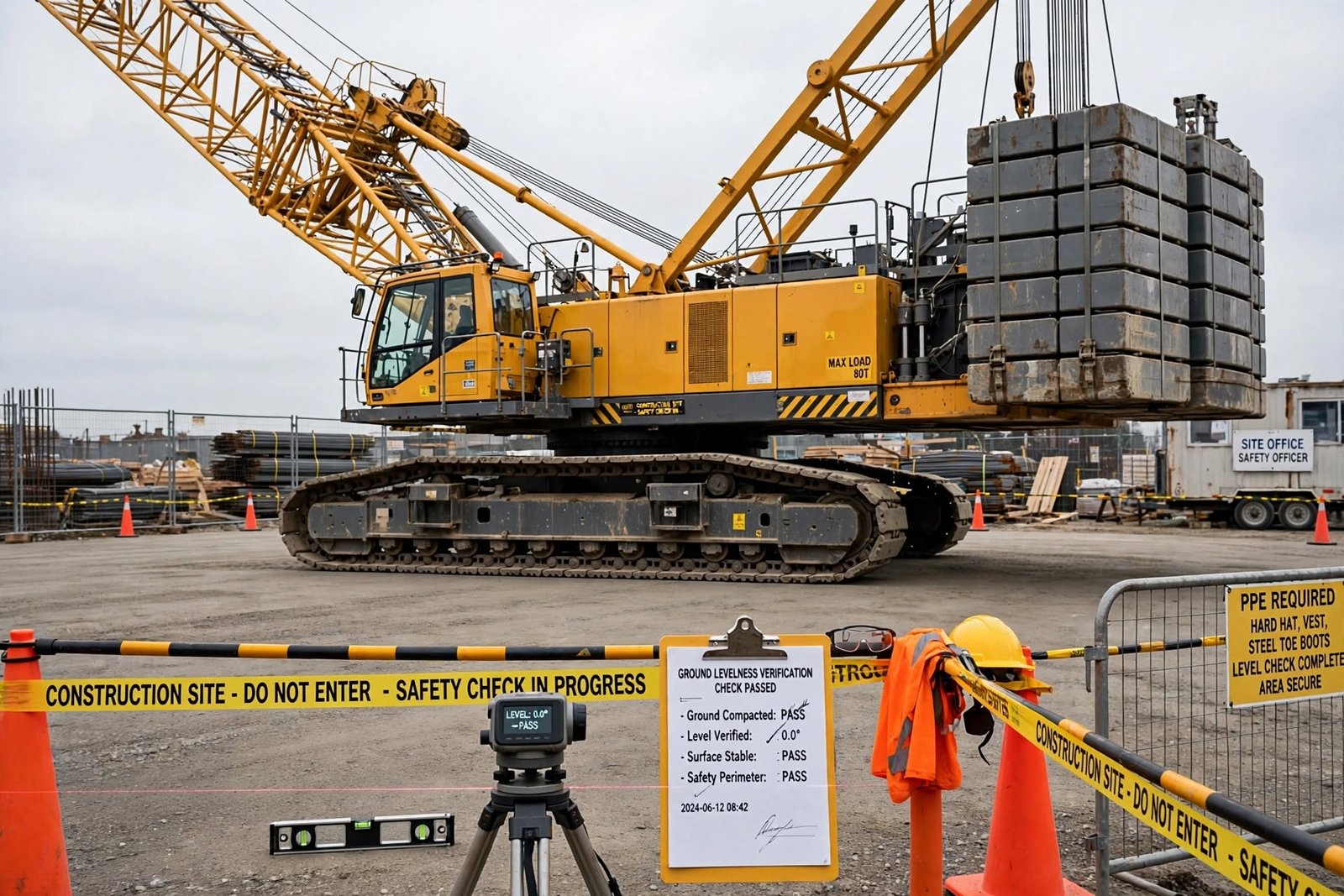
The second Mobile Crane Ground Conditions factor is slope. Cranes must be level. Manufacturers specify maximum slope. Most allow 1 percent grade. Some allow 2 percent. Exceeding slope limits causes tipping. Slope affects stability significantly.
Measuring Ground Slope
Use a digital level. Use a builder’s level. Use a laser level. Measure in multiple directions. Measure at each outrigger. Record all readings. Slope measurement is essential for safety.
Slope Limits by Crane Type
Truck cranes allow 1 percent slope. Rough terrain cranes allow 2 percent. All terrain cranes allow 1.5 percent. Crawler cranes allow 3 percent. Check your manufacturer specifications. Each crane differs. Exceeding limits violates safety requirements.
Correcting Slope Problems
Use outrigger jacks to level the crane. Extend outriggers higher on the low side. Use blocking under pads. Use cribbing for additional height. Never exceed outrigger stroke limits. Never block beyond manufacturer limits. Level the crane completely. Leveling corrects these issues.
4 3. Ground Water and Moisture
The third Mobile Crane Ground Conditions factor is moisture. Water weakens soil. Water lubricates soil particles. Water causes settlement. Water creates mud. Wet ground fails under load. Site stability changes with moisture.
How Water Affects Soil
Dry sand holds together poorly. Wet sand holds together better. Saturated sand loses strength. Dry clay is very strong. Wet clay becomes soft. Saturated clay becomes mud. Water changes everything. Site stability depends on moisture content.
Managing Water on Site
Divert water away from crane positions. Dig drainage channels. Use pumps to remove standing water. Cover ground with plastic sheeting. Add crushed stone for drainage. Wait for ground to dry. Never set up on saturated ground. Proper water management improves the foundation.
After Rain Events
Reassess ground after any rain. Light rain may not affect ground. Heavy rain changes conditions. Wait for ground to drain. Test bearing capacity again. Recheck slope and levelness. Document new conditions. Rain changes the site significantly.
5 4. Underground Utilities and Voids
The fourth Mobile Crane Ground Conditions factor is underground hazards. Buried utilities create collapse risk. Voids cause sudden settlement. Tanks create hidden dangers. Tunnels create unstable ground. Safety requires utility identification.
Identifying Underground Utilities
Call 811 before any excavation. Request utility locating services. Review site utility maps. Check as-built drawings. Look for utility markers. Look for manhole covers. Look for valve boxes. Mark all utility locations. Utility identification is critical for safety.
If trenching is needed around utility areas, compact and specialized equipment like the TYPHON GroundRipper GRX1 Compact Track Trencher handles narrow precision work.
Avoiding Underground Hazards
Position outriggers away from utilities. Maintain safe distances. Use bridging over shallow utilities. Use mats to spread load. Reduce crane capacity near utilities. Consult utility owners. Get written approval. Document all precautions. These steps protect the setup.
6 5. Ground Surface Conditions
The fifth Mobile Crane Ground Conditions factor is surface condition. Surface conditions affect outrigger stability. Asphalt can crack under pressure. Concrete can crack and settle. Gravel shifts under load. Dirt compacts unevenly. Grass hides soft spots. Stability depends on surface type.
Asphalt and Concrete Surfaces
Asphalt fails under concentrated loads. Asphalt deforms in heat. Concrete cracks under point loads. Concrete settles over voids. Both surfaces hide what lies beneath. Test bearing capacity anyway. Use larger pads to spread load. Protect surfaces with mats. Surface assessment supports a solid setup.
Gravel and Dirt Surfaces
Gravel shifts under outrigger pads. Gravel compacts unevenly. Dirt compacts differently by area. Dirt hides soft spots. Both surfaces need testing. Both surfaces need preparation. Compact gravel before setup. Level dirt before setup. Surface preparation improves stability.
Grass and Vegetated Surfaces
Grass hides soil conditions. Grass indicates moisture levels. Grass areas often have soft soil. Grass areas often have buried debris. Remove grass before setup. Test soil beneath grass. Prepare ground properly. Never trust grass surfaces. Safety requires surface removal.
7 6. Ground Preparation and Reinforcement
The sixth Mobile Crane Ground Conditions factor is preparation. Proper preparation improves ground capacity. Proper preparation distributes loads. Proper preparation prevents settlement. Proper preparation ensures success.
Crane Mats and Pads
Use crane mats under outriggers. Mats spread load over larger area. Mats reduce ground pressure. Wood mats work for moderate loads. Steel mats work for heavy loads. Composite mats work for wet ground. Choose mats sized for your crane. Mats improve stability.
Timber Cribbing
Use timber cribbing for leveling. Use hardwood timbers. Stack timbers in alternating layers. Secure timbers together. Never exceed cribbing height limits. Inspect cribbing before use. Replace damaged timbers. Cribbing supports the setup.
Crushed Stone and Gravel
Add crushed stone for drainage. Add gravel for load distribution. Compact stone thoroughly. Level stone surface. Test bearing capacity after addition. Stone improves weak ground. Gravel improves the foundation.
Soil Compaction
Compact soil before setup. Use a plate compactor. Use a roller for large areas. Compact in layers. Test compaction density. Achieve required density. Compacted soil supports the crane.
8 Additional Considerations
Beyond the 6 factors, consider these points. These points affect setup decisions.
Weather Monitoring and Load Distribution
Check weather forecasts before setup. Monitor weather during operation. Rain changes ground conditions. Freezing changes ground conditions. Thawing changes ground conditions. Stop work if conditions deteriorate. Weather monitoring supports safety.
Calculate load per outrigger. Consider dynamic forces. Consider wind effects. Consider load swing. Distribute load evenly. Adjust crane position if needed. Load distribution affects stability.
Documentation
Document all ground assessments. Photograph ground conditions. Record test results. Record preparation methods. Keep records on site. Documentation proves compliance.
9 Conclusion
Mobile Crane Ground Conditions determine setup safety. Mobile Crane Ground Conditions prevent accidents. Mobile Crane Ground Conditions require careful assessment. Follow these 6 critical factors. Evaluate soil bearing capacity first. Measure and correct ground slope. Manage water and moisture properly. Identify underground utilities and voids. Assess ground surface conditions. Prepare and reinforce the ground.
Mobile Crane Ground Conditions change over time. Mobile Crane Ground Conditions change with weather. Mobile Crane Ground Conditions require constant monitoring. Reassess the site regularly. Document all findings. Train your team on site assessment. Apply this Mobile Crane Ground Conditions guide on every job.
Your Mobile Crane Ground Conditions assessment protects lives. Your Mobile Crane Ground Conditions preparation prevents tip-overs. Your Mobile Crane Ground Conditions documentation proves compliance. Your Mobile Crane Ground Conditions knowledge builds confidence. Start every project with proper Mobile Crane Ground Conditions evaluation. Your crane setup will be safe. Your lifts will succeed. Your projects will finish on time.
10 Our Business Partners
We believe in collaborating with the best in the industry to bring unmatched value to our construction projects. Watch the video below to learn more about our operational standards and partnerships.


[…] For further insights on site factors, review our guide on mobile crane ground conditions. […]
[…] For more detailed information on ground requirements, check our guide on mobile crane ground conditions. […]