
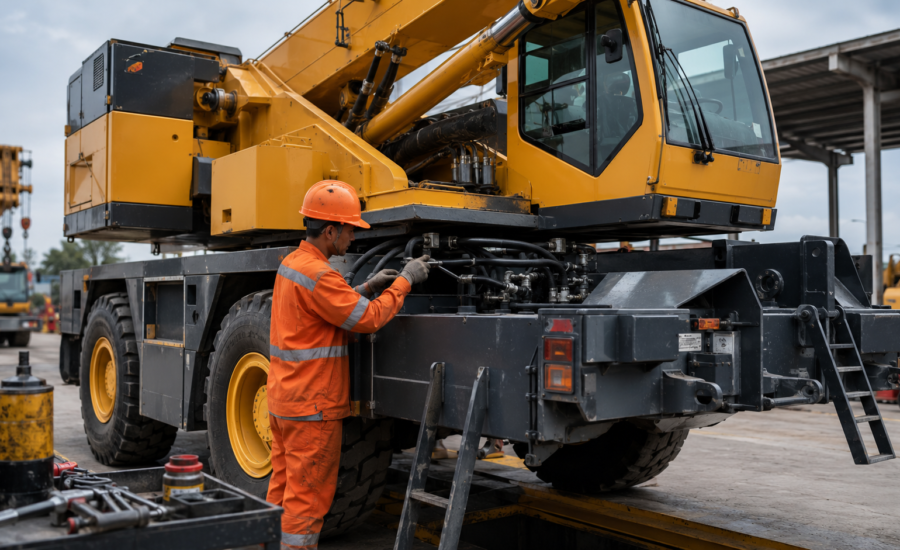
A rough terrain crane works in harsh conditions. A rough terrain crane lifts heavy loads daily. A rough terrain crane moves on rough ground. A rough terrain crane needs regular maintenance. Maintenance keeps your rough terrain crane running. Maintenance prevents costly breakdowns. Maintenance extends equipment life. This guide covers rough terrain crane maintenance. This guide gives you 7 practical tips. The equipment requires daily attention. The machine needs weekly checks. This lifter demands monthly services. Follow these maintenance tips carefully. Apply them to your equipment. Your rough terrain crane will perform better.
Table of Contents
- 1. Tip 1: Perform Daily Visual Inspections
- 2. Tip 2: Follow the Lubrication Schedule
- 3. Tip 3: Change Fluids on Schedule
- 4. Tip 4: Inspect Tires Frequently
- 5. Tip 5: Service the Boom System
- 6. Tip 6: Maintain the Outrigger System
- 7. Tip 7: Keep Accurate Maintenance Records
- 8. Additional Maintenance Tips
- 9. Conclusion
- Our Business Partners
1 Tip 1: Perform Daily Visual Inspections
The first rough terrain crane tip is daily inspection. Daily inspection catches small problems. Small problems become big failures. The equipment has many components. Each component needs checking. Start your day with a walkaround. Look at every part of the machine.
What to Check
Walk around the equipment completely. Look at the boom for dents. Look at the boom for cracks. Look at the boom for rust. Look at the hydraulic cylinders for scoring. Look at the hydraulic cylinders for leaks. Look at the cables for fraying. Look at the cables for kinks. Look at the hook for deformation. Look at the hook for latch function. Look at the tires for cuts. Look at the tires for bulges. Look at the tires for proper pressure. Look at the outriggers for damage. Look at the outriggers for leaks. Look at the undercarriage for debris. Look at the counterweight for secure attachment. These checks support your rough terrain crane.
Why It Matters
Daily inspection prevents breakdowns. A small crack becomes a big crack. A small leak becomes a big leak. A small cut becomes a blowout. Catching problems early saves money. Catching problems early saves time. Catching problems early saves lives. Daily inspection is essential for a rough terrain crane.
How to Implement
Create a daily inspection checklist. Keep the checklist in the cab. Complete the checklist each morning. Sign and date the form. Report any issues immediately. Address issues before starting work. Review checklists weekly with the team. Use checklists for training. Daily inspection protects your rough terrain crane.
2 Tip 2: Follow the Lubrication Schedule
The second rough terrain crane tip is proper lubrication. Lubrication reduces friction. Lubrication prevents wear. Lubrication extends component life. The machine has many moving parts. Each part needs the right lubricant. Follow the manufacturer schedule for your equipment.
Lubrication Points
Grease the boom wear pads regularly. Grease the boom slide plates. Grease the telescopic cylinders. Grease the boom pivot pins. Grease the outrigger pivot pins. Grease the outrigger extension cylinders. Grease the swing bearing. Grease the sheave bearings. Grease the hook swivel. Use the specified grease type for your rough terrain crane.
How Often
Lubricate daily for heavy use. Lubricate weekly for moderate use. Lubricate monthly for light use. Check the manufacturer recommendations. Adjust based on your conditions. Dusty sites need more lubrication. Wet sites need more lubrication. Hot sites need more lubrication. Proper frequency supports your machine.
Best Practices
Clean grease fittings before greasing. Remove old grease before adding new. Apply grease until fresh appears. Wipe excess grease from surfaces. Replace damaged fittings immediately. Use a grease gun with proper pressure. Record lubrication activities. Training helps operators lubricate correctly. Lubrication extends your equipment life.
3 Tip 3: Change Fluids on Schedule
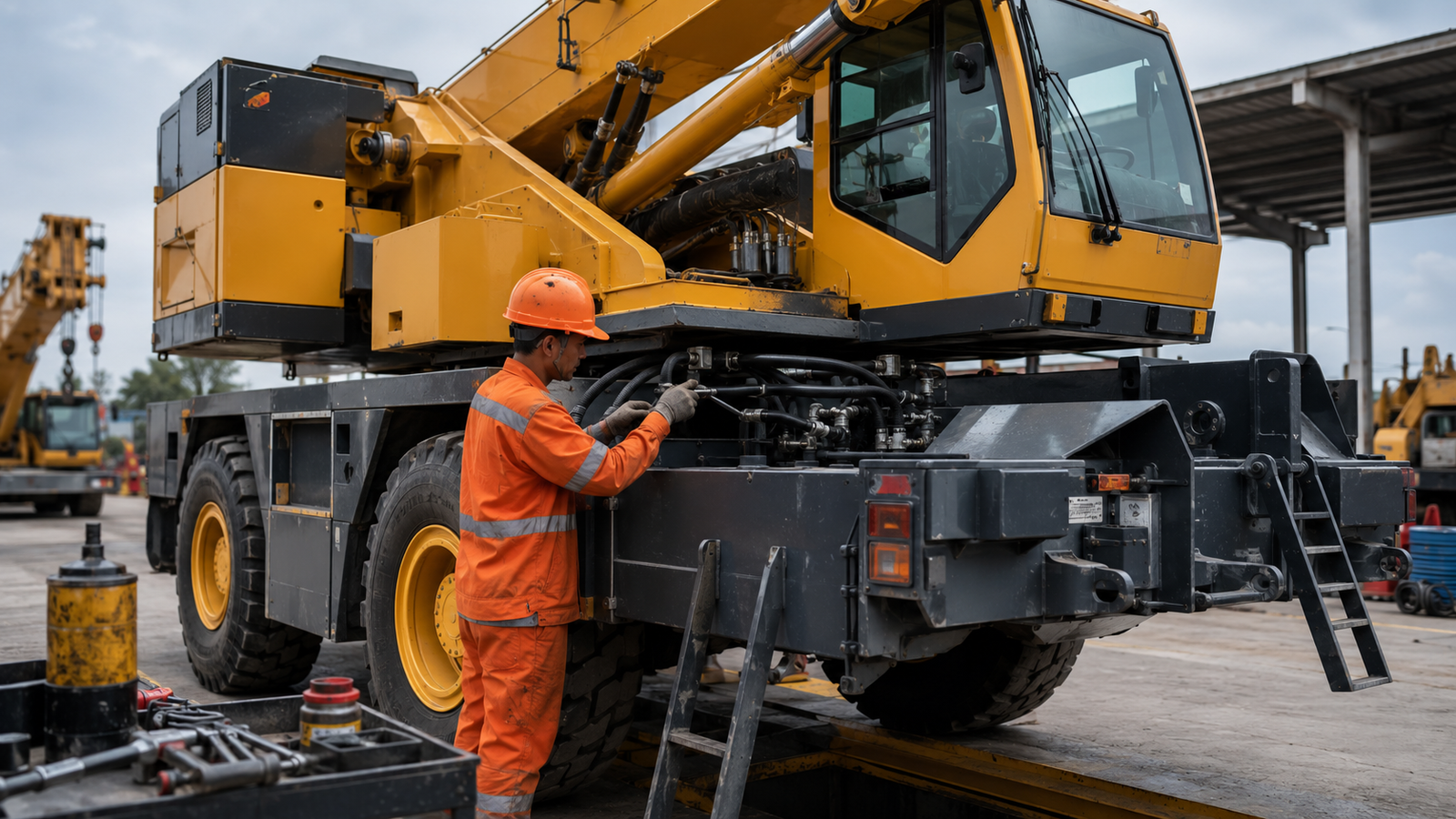
The third rough terrain crane tip is fluid changes. Fluids power your crane. Fluids cool your crane. Fluids protect your crane. The equipment has multiple fluid systems. Each system needs regular changes. Follow the manufacturer schedule for your machine.
Engine Oil
Change engine oil at specified intervals. Use the manufacturer recommended grade. Use the recommended viscosity. Change the oil filter each time. Change the bypass filter as needed. Record the oil change date. Record the hour meter reading. Send oil samples for analysis. Analysis detects internal wear. Analysis detects contamination. Oil changes protect your rough terrain crane engine.
Hydraulic Fluid
Check hydraulic fluid levels daily. Add fluid as needed. Use the specified hydraulic fluid. Change hydraulic fluid at manufacturer intervals. Change hydraulic filters regularly. Change breather filters annually. Sample hydraulic fluid for testing. Testing detects pump wear. Testing detects cylinder wear. Testing detects water contamination. Clean the reservoir during changes. Hydraulic care supports your rough terrain crane.
Transmission and Differential Fluids
Check transmission fluid levels weekly. Use the specified fluid type. Change transmission fluid at intervals. Change differential oil at intervals. Check for metal particles in the oil. Metal indicates gear wear. Inspect transmission cooler for leaks. Inspect cooler for blockages. Transmission care protects your rough terrain crane.
Coolant System
Check coolant levels daily. Use the recommended coolant type. Use a 50-50 coolant-water mix. Check freeze protection before winter. Check boil protection before summer. Change coolant at manufacturer intervals. Replace hoses at scheduled times. Clean radiator fins regularly. Check water pump for leaks. Coolant management supports your equipment.
4 Tip 4: Inspect Tires Frequently
The fourth rough terrain crane tip is tire inspection. Tires support the entire crane. Tires provide traction. Tires absorb shock. The machine works on rough ground. Tires take significant abuse. Inspect tires frequently for your rough terrain crane.
Tire Pressure
Check tire pressure daily. Use a quality pressure gauge. Compare to manufacturer specifications. Inflate to the correct pressure. Under-inflation causes heat buildup. Under-inflation causes tire failure. Over-inflation reduces traction. Over-inflation causes ride harshness. Proper pressure extends tire life. Proper pressure supports your equipment.
Tire Condition
Look for cuts in the sidewalls. Look for bulges on the tread. Look for embedded objects. Look for uneven tread wear. Uneven wear indicates alignment issues. Uneven wear indicates suspension issues. Measure tread depth regularly. Replace tires when tread is low. Rotate tires as recommended. Tire condition affects machine safety.
Wheel Hardware
Check wheel lug nuts for tightness. Check for missing hardware. Check for damaged studs. Check wheel rims for cracks. Check wheel rims for bends. Replace damaged rims immediately. Tighten lug nuts to specification. Recheck after the first 50 miles. Wheel hardware is critical for your rough terrain crane.
5 Tip 5: Service the Boom System
The fifth rough terrain crane tip is boom maintenance. The boom does the lifting. The boom extends and retracts. The boom takes heavy loads. The boom needs regular service. Follow these boom care guidelines for your equipment.
Boom Section Inspection
Inspect each boom section visually. Look for dents on the surface. Look for cracks at the welds. Look for rust forming on the steel. Look for scoring on the slides. Look for wear on the pads. Measure section clearance periodically. Excessive clearance indicates wear. Excessive clearance affects stability. Boom inspection protects your machine.
Telescopic Cylinders
Inspect telescopic cylinders for leaks. Look for scratches on the rods. Look for pitting on the rods. Check cylinder mounting pins for wear. Check cylinder hoses for damage. Extend and retract the boom slowly. Listen for unusual noises. Feel for unusual vibrations. Smooth operation indicates good condition. Cylinder care supports your equipment.
Sheaves and Wire Rope
Inspect sheaves for groove wear. Inspect sheaves for flange cracks. Check sheave bearings for play. Lubricate sheave bearings regularly. Inspect wire rope for broken wires. Inspect wire rope for corrosion. Measure rope diameter weekly. Replace rope at 10% diameter loss. Replace rope with excessive broken wires. Sheave and rope care is vital for your rough terrain crane.
6 Tip 6: Maintain the Outrigger System
The sixth maintenance tip is outrigger maintenance. Outriggers stabilize the crane. Outriggers level the crane. Outriggers prevent tipping. The machine relies on outriggers. Maintain them properly for your equipment.
Outrigger Beam Inspection
Inspect outrigger beams for straightness. Look for cracks at the welds. Look for rust on the surface. Check beam extension for smoothness. Check beam locks for proper function. Lubricate beam slides regularly. Clean beams after muddy jobs. Beam condition affects machine stability.
Outrigger Cylinders
Inspect outrigger cylinders for leaks. Look for scratches on cylinder rods. Look for pitting on the rods. Check cylinder mounting pins. Check hydraulic hoses for damage. Extend and retract each cylinder. Listen for unusual sounds. Feel for smooth movement. Cylinder care supports your machine.
Outrigger Pads
Inspect outrigger pads for cracks. Check pads for excessive wear. Check pad attachment hardware. Replace damaged pads immediately. Use pads sized for your crane. Carry spare pads on the truck. Clean pads after each use. Store pads properly. Pad condition affects safety.
7 Tip 7: Keep Accurate Maintenance Records
The seventh maintenance tip is record keeping. Records track maintenance history. Records predict future needs. Records prove compliance. The equipment needs documentation. Keep detailed records for your rough terrain crane.
What to Record
Record every maintenance action. Record the date of service. Record the hour meter reading. Record the technician name. Record parts replaced. Record fluids changed. Record any issues found. Record any repairs made. Record inspection results. Good records support your machine.
How to Organize
Use a bound logbook for records. Keep digital copies for backup. Organize records by date. Organize records by system. Create a maintenance schedule. Schedule future services in advance. Set reminders for upcoming maintenance. Review records quarterly. Use records to plan budgets. Organization helps your equipment.
Why Records Matter
Records prove warranty compliance. Records support resale value. Records help with insurance claims. Records identify recurring problems. Records show maintenance history. Records demonstrate due diligence. Records protect your investment. Good records are essential for your rough terrain crane.
8 Additional Maintenance Tips for Owners
Beyond the seven tips, follow these additional practices. These practices further protect your machine.
Operator Training
Train operators on maintenance basics. Train operators to perform inspections. Train operators to document findings. Train operators to report problems early. Trained operators catch issues sooner. Trained operators prevent damage. Training supports your equipment.
Seasonal Maintenance
Adjust maintenance for seasons. Prepare for winter conditions. Use winter-grade lubricants. Check antifreeze before winter. Check battery condition before winter. Prepare for summer conditions. Check cooling systems before summer. Check air conditioning function. Seasonal care protects your machine.
Parts Replacement
Use genuine manufacturer parts. OEM parts fit correctly. OEM parts perform reliably. Generic parts may fail early. Generic parts may cause damage. Record all part replacements. Track part numbers for reference. Genuine parts extend machine life.
9 Conclusion
A rough terrain crane is a major investment. The equipment requires proper maintenance. Follow these seven maintenance tips. Perform daily visual inspections. Follow the lubrication schedule. Change fluids on schedule. Inspect tires frequently. Service the boom system. Maintain the outrigger system. Keep accurate maintenance records.
These tips keep your machine running. These tips prevent unexpected breakdowns. These tips reduce repair costs. These tips extend equipment life. A well-maintained machine performs better. A well-maintained machine is safer. A well-maintained machine is more productive.
Train your team on these maintenance tips. Review this guide regularly. Apply these tips consistently. Your machine will serve you for years. Your projects will stay on schedule. Your costs will remain under control. Maintenance is the key to success with your equipment.
10 Our Business Partners
We believe in collaborating with the best in the industry to bring unmatched value to our construction projects. Watch the video below to learn more about our operational standards and partnerships.


qmikengimwqymmruixtdetogwmuuwm
[…] ensure optimal safety checks, review the best practices detailed in our 7 maintenance tips […]