

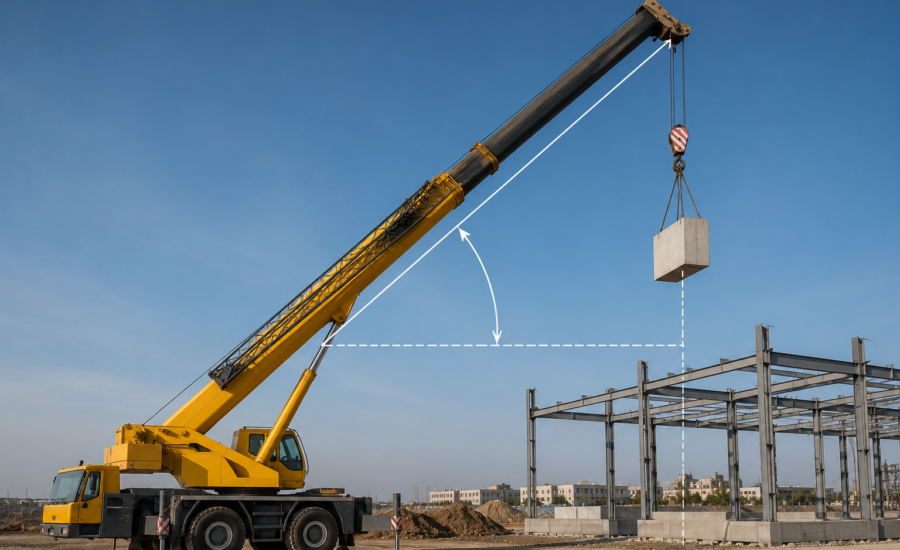
Using Mobile Crane Load Charts: 5 Steps to Read and Apply Them Correctly starts with understanding the chart layout. Following Mobile Crane Load Charts: 5 Steps to Read and Apply Them Correctly requires you to find the crane model and depends on accurate radius measurements. Mastering Mobile Crane Load Charts: 5 Steps to Read and Apply Them Correctly demands proper boom angle interpretation and ends with applying safety margins. These processes protect your lifts, prevent overloads, and save lives on site. This guide covers Mobile Crane Load Charts: 5 Steps to Read and Apply Them Correctly completely. You will learn every step and apply them immediately.
Table of Contents
1 Identify Your Crane Configuration
Mobile Crane Load Charts: 5 Steps to Read and Apply Them Correctly begin with identification. Every crane model has a specific load chart. Different configurations change load capacities. Locate the correct chart for your crane. This first step is critical for Mobile Crane Load Charts: 5 Steps to Read and Apply Them Correctly.
Find the Crane Model Number
Check the crane identification plate on the cab exterior or the boom base. Write down the full model number and serial number. Compare these numbers with your chart. Using the wrong chart causes fatal errors and voids your safety margin. This verification supports Mobile Crane Load Charts: 5 Steps to Read and Apply Them Correctly.
Determine Boom Configuration & Outrigger Position
Identify your boom type, whether telescopic or lattice, and check for jib or fly attachments. Verify your outrigger setup—fully extended, partially extended, or lifting on rubber tires. Fully extended outriggers give maximum capacity, while on-rubber lifts give reduced capacity. Knowing this configuration is essential for Mobile Crane Load Charts: 5 Steps to Read and Apply Them Correctly.
Verify Counterweight Configuration
Check your counterweight setup. Match your setup to the chart exactly. Missing counterweights cause tip-overs, while extra counterweights affect stability. Proper setup is a core part of Mobile Crane Load Charts: 5 Steps to Read and Apply Them Correctly.
2 Measure the Load Radius
Mobile Crane Load Charts: 5 Steps to Read and Apply Them Correctly continue with radius measurement. Load radius is the horizontal distance from the crane center to the load center. Capacity decreases as radius increases.
Find the Center of Rotation
The center of rotation is the turntable center directly under the boom pivot. Mark this point on the ground using a plumb bob or laser level as your zero reference point. This reference supports Mobile Crane Load Charts: 5 Steps to Read and Apply Them Correctly.
Measure Horizontal Distance & Account for Obstacles
Measure from the center of rotation to the center of the load. Verify the crane’s onboard radius indicator with physical measurement. Consider obstacles in the load path that affect the effective radius. Adding clearance prevents collisions, which is vital for Mobile Crane Load Charts: 5 Steps to Read and Apply Them Correctly.
For operations requiring material moving around a busy yard prior to lifting, deploying equipment like the TYPHON STOMP X1300 Mini Skid Steer Loader helps clear obstacles effortlessly.
3 Determine the Boom Length and Angle
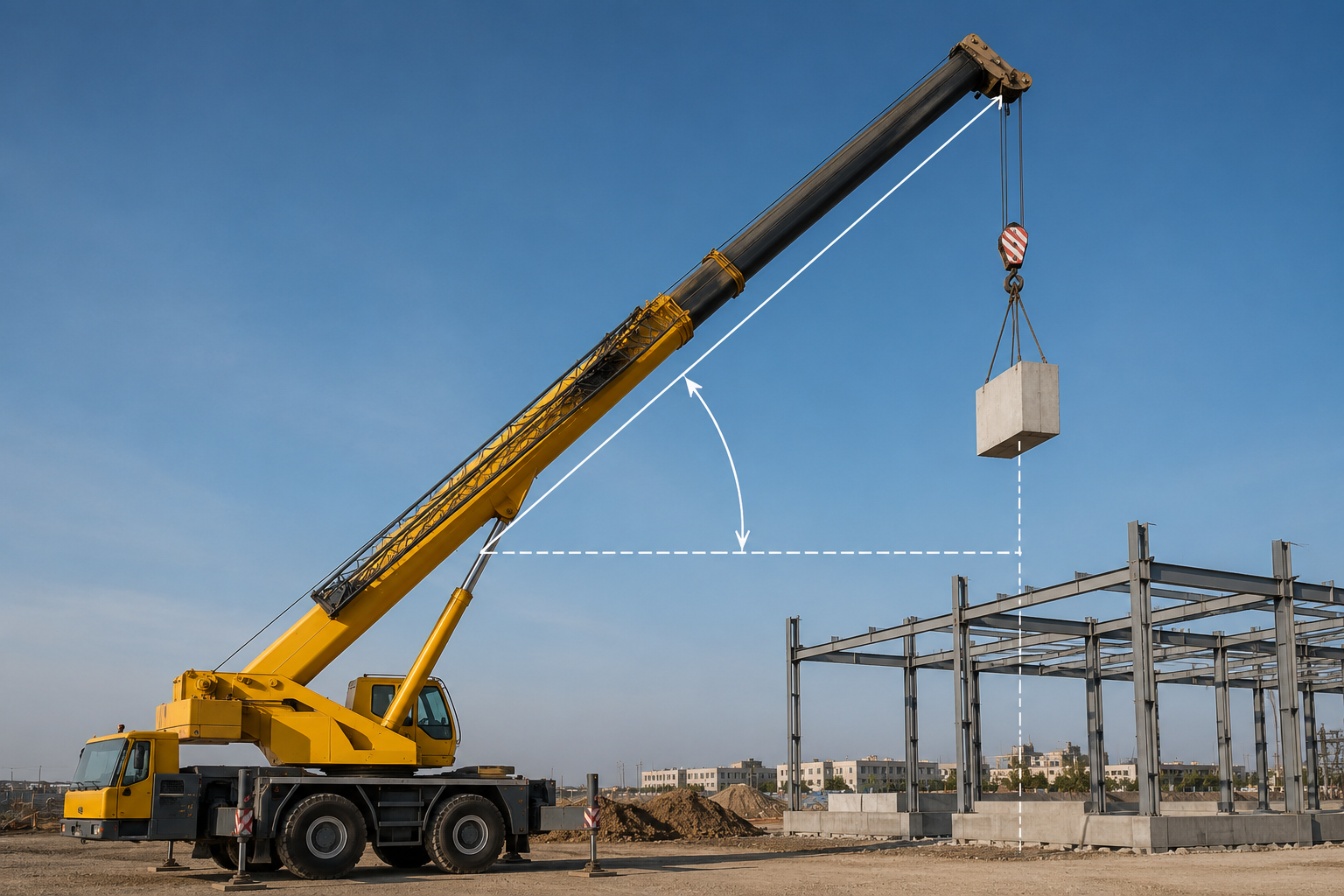
Mobile Crane Load Charts: 5 Steps to Read and Apply Them Correctly require boom length and angle data. Both numbers determine lifting capacity and affect the load radius.
Read the Boom Length and Angle Indicators
Check the boom length indicator in the cab. Verify with a physical inclinometer because physical verification prevents errors. Also, account for boom deflection under load, as the effective radius increases and the effective angle decreases. Accurate readings are essential for Mobile Crane Load Charts: 5 Steps to Read and Apply Them Correctly.
4 Read the Load Capacity Number
Mobile Crane Load Charts: 5 Steps to Read and Apply Them Correctly now move to the chart itself. The load chart is a grid showing radius values and boom lengths.
Locate Your Radius Row and Boom Length Column
Find your measured radius on the left column and interpolate between values if needed. Find your boom length across the top. Finding this intersection is the core of Mobile Crane Load Charts: 5 Steps to Read and Apply Them Correctly.
Understand Chart Annotations
Read the intersection number carefully and check for footnotes. Look for symbols on the chart explaining specific conditions like jib capacities or fly attachments. Understanding notes is vital for Mobile Crane Load Charts: 5 Steps to Read and Apply Them Correctly.
Just as proper reading is crucial, maintaining 5 essential maintenance tips on your machinery ensures those capacities hold true during heavy lifts.
5 Apply Safety Margins
Mobile Crane Load Charts: 5 Steps to Read and Apply Them Correctly end with safety application. The chart shows maximum capacity, but you must apply a safety margin to every lift.
Calculate Your Gross Load and Apply the 80% Rule
Add every component of your load including item weight, rigging, sling, and hook weight. This total is your gross load. Stay below 80% of rated capacity. Multiply chart capacity by 0.80 to find your working limit. This practice supports Mobile Crane Load Charts: 5 Steps to Read and Apply Them Correctly.
Document Your Calculation and Review with the Team
Consider dynamic factors like swinging or wind, which increase load forces. Write down every measurement and share your calculation with the crew. Team review prevents errors and supports Mobile Crane Load Charts: 5 Steps to Read and Apply Them Correctly.
6 Common Mistakes to Avoid
Even with Mobile Crane Load Charts: 5 Steps to Read and Apply Them Correctly, errors happen. Learn these common mistakes to avoid them on your site.
Using the Wrong Chart & Ignoring Rigging Weight
Do not use a similar or older model chart. Forgetting rigging weight causes overload. Include slings and shackles in your gross load. Chart verification is essential for Mobile Crane Load Charts: 5 Steps to Read and Apply Them Correctly.
Additionally, keeping a compact support vehicle like a Kubota Diesel Mini Skid Steer Loader on site is helpful for adjusting rigged loads before lifts.
7 Conclusion
Mobile Crane Load Charts: 5 Steps to Read and Apply Them Correctly are essential for safe operation. Identify your crane configuration, measure the load radius accurately, determine boom length and angle, read the load capacity number, and finally apply safety margins.
By following Mobile Crane Load Charts: 5 Steps to Read and Apply Them Correctly, you protect your crew, your crane, and your project timeline. Train your team regularly on these procedures, as your safety depends entirely on applying Mobile Crane Load Charts: 5 Steps to Read and Apply Them Correctly on every single lift.
For more equipment reliability procedures, don’t forget to review the 5 essential maintenance tips guide.
8 Our Business Partners
We believe in collaborating with the best in the industry to bring unmatched value to our construction projects. Watch the video below to learn more about our operational standards and partnerships.


[…] it completely and apply this knowledge on your next project alongside understanding how to read mobile crane load charts […]
[…] Understanding a rough terrain crane starts with the basics. It is a mobile lifting machine that has large rubber tires and a single cab design. The cab rotates with the boom, allowing the machine to work on uneven ground. This guide explains every feature, covers all benefits, and compares different models. It discusses applications and helps you select the right machine. This guide serves as an excellent resource for beginners and a reliable reference for project managers. Read this rough terrain crane guide completely and apply this knowledge on your next project alongside knowing how to properly read mobile crane load charts. […]