

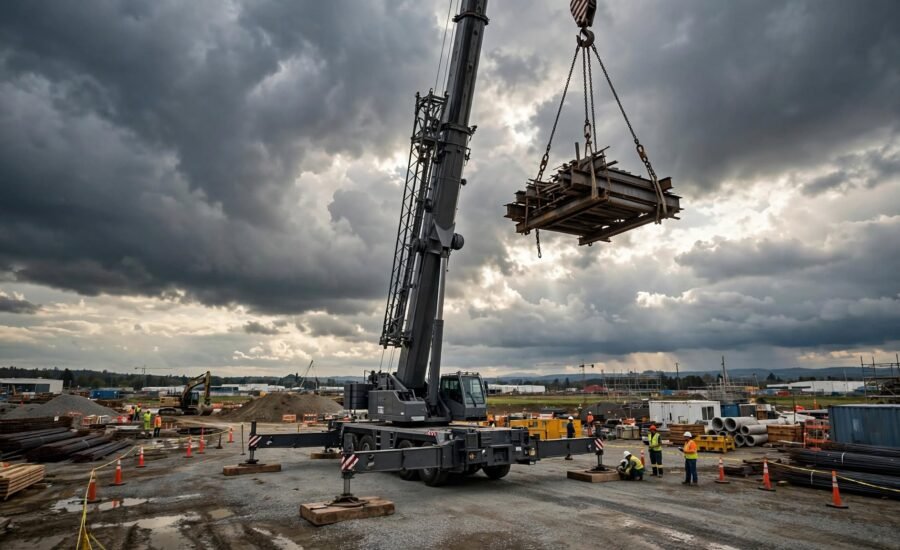
Mobile Crane Outrigger Setup prevents tip-overs. It stabilizes the crane. Mobile Crane Outrigger Setup distributes weight. It protects operators. It protects ground crews. It protects equipment. It requires proper planning. It requires ground assessment. It requires correct positioning. The procedure varies by crane type. It changes with site conditions. It demands attention to detail. This guide covers Mobile Crane Outrigger Setup thoroughly. This guide gives you 7 clear steps. Mobile Crane Outrigger Setup is not optional. Mobile Crane Outrigger Setup is the foundation of safe lifting. Read this guide completely. Apply these steps on every job.
Table of Contents
- 1. Why It Matters
- 2. 1. Assess Ground Conditions First
- 3. 2. Position the Crane Correctly
- 4. 3. Extend Outriggers Fully
- 5. 4. Place Proper Outrigger Pads
- 6. 5. Level the Crane Precisely
- 7. 6. Verify Ground Contact and Pressure
- 8. 7. Document and Recheck Setup
- 9. Additional Considerations
- 10. Conclusion
- Our Business Partners
1 Why Mobile Crane Outrigger Setup Matters
Mobile Crane Outrigger Setup supports the entire crane. Outriggers transfer weight to the ground. Outriggers create a wide base. Outriggers prevent tipping. Poor Mobile Crane Outrigger Setup causes accidents. It causes injuries. It causes deaths. It destroys equipment. It stops projects. Proper Mobile Crane Outrigger Setup prevents these outcomes.
The Physics of Outrigger Stability
The crane has a center of gravity. The load shifts this center. Outriggers create a support polygon. The center of gravity must stay inside this polygon. If it moves outside, the crane tips. Outrigger position determines the polygon size. Wider outriggers create a larger polygon. Larger polygons allow more stability. Mobile Crane Outrigger Setup directly affects this geometry.
Real Consequences of Poor Setup
A crane tipped over last year. The operator extended outriggers partially. The ground was soft on one side. The outrigger pad sank into the soil. The crane tilted toward that corner. The load swung outward. The crane fell onto its side. The operator was injured. The crane was destroyed. The investigation found poor Mobile Crane Outrigger Setup. This accident was preventable.
2 1. Assess Ground Conditions First
The first step is ground assessment. Ground conditions determine outrigger stability. Soft ground causes sinking. Sloped ground causes tilting. Weak ground causes failure. Assess ground before positioning outriggers.
Testing Ground Bearing Capacity
Use a penetrometer for quick tests. Use a plate load test for accuracy. Test at each outrigger position. Test at multiple depths. Record all results. Compare to crane requirements. Mobile Crane Outrigger Setup depends on this data.
Identifying Hazards and Preparing Weak Ground
Look for soft spots. Look for filled areas. Look for underground utilities. Look for buried tanks. Look for recent excavation. Look for water accumulation. Mark all hazards. Avoid positioning outriggers over hazards. Safety requires hazard identification.
Add crushed stone for support. Compact the soil thoroughly. Use crane mats under pads. Use timber cribbing for extra support. Improve drainage if needed. Test again after preparation. Safe lifting requires proper ground preparation.
For more detailed information on ground requirements, check our guide on mobile crane ground conditions.
3 2. Position the Crane Correctly
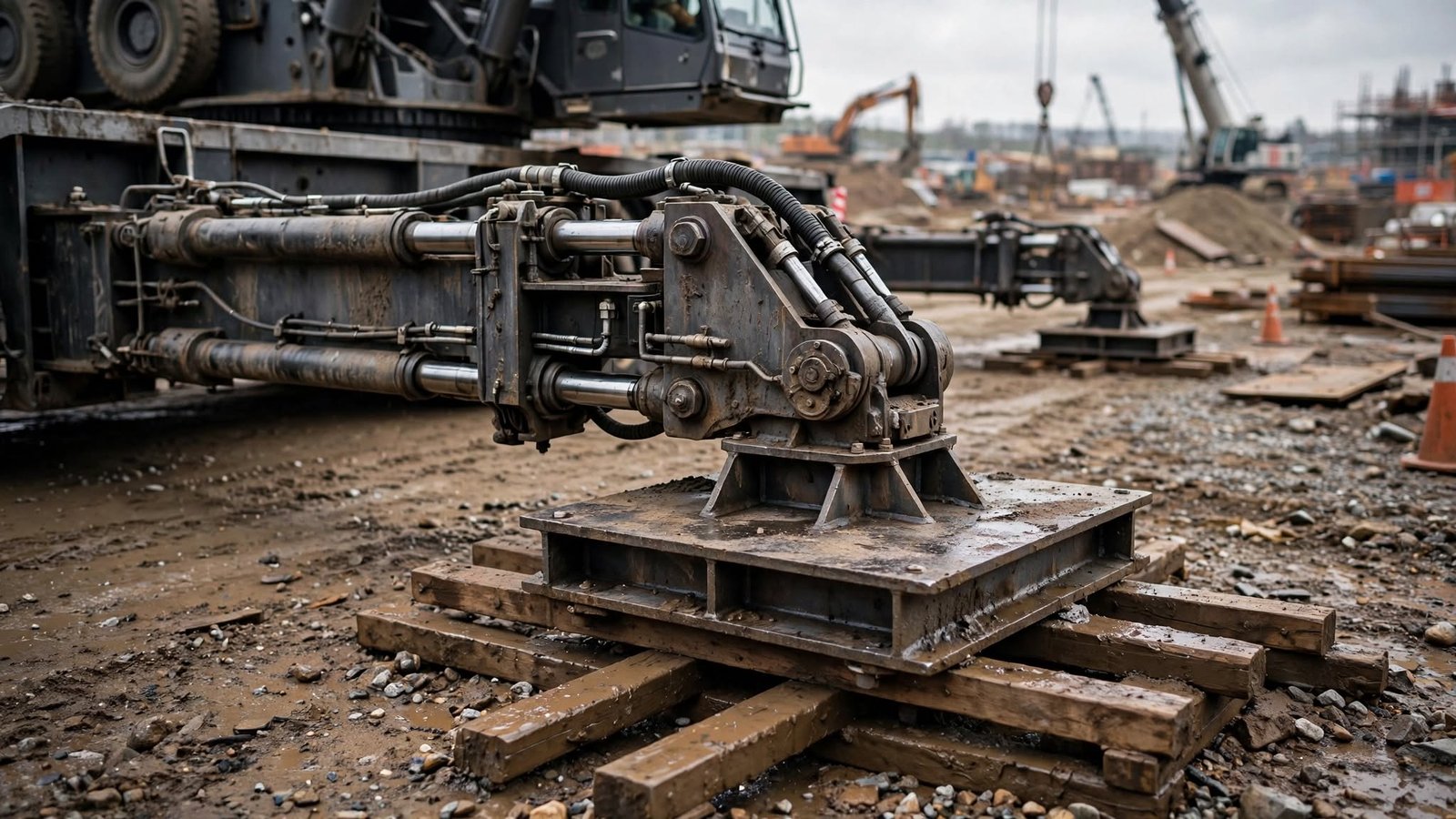
The second step is crane positioning. Crane position affects outrigger placement. Crane position affects load radius. Crane position affects swing clearance. Position the crane for optimal stability.
Choosing the Position and Swing Clearance
Position the crane close to the load. Position the crane on the best ground. Position the crane for minimum radius. Position the crane for maximum stability. Consider the load path. Consider the landing zone. Consider obstacle clearance. Mobile Crane Outrigger Setup starts with good positioning.
Verify the swing radius is clear. Check for buildings and structures. Check for power lines. Check for other equipment. Check for personnel. Mark the swing radius clearly. Keep the area clear during operation. Safe operation requires swing clearance.
Verifying Load Radius
Measure from crane center to load center. Compare to the load chart. Ensure the radius is within capacity. Adjust crane position if needed. Smaller radius increases capacity. Mobile Crane Outrigger Setup affects load radius.
If precise grading or earthmoving is required for proper positioning, support machinery such as the TYPHON STOMP 65 4WD Skid Steer Loader proves extremely beneficial.
4 3. Extend Outriggers Fully
The third step is full extension. Outriggers must extend completely. Partial extension reduces stability. Partial extension reduces capacity. Partial extension causes accidents. Always extend outriggers fully.
Why Full Extension Matters
Full extension creates the largest base. The largest base provides maximum stability. The largest base allows maximum capacity. Partial extension shrinks the base. A smaller base tips more easily. The load chart assumes full extension. Mobile Crane Outrigger Setup requires full extension.
Indicators and Space Limitations
Most cranes have extension indicators. Check each outrigger indicator. Verify full extension on all sides. Look for lock engagement. Listen for locking clicks. Test by pushing on the beam. Safety requires locked outriggers.
Some sites limit outrigger extension. Walls may block one side. Equipment may block another. Never compromise on extension. Find another crane position. Use a smaller crane. Use a different lifting method. The configuration requires full extension for safety.
5 4. Place Proper Outrigger Pads
The fourth step is pad placement. Pads distribute load to the ground. Pads reduce ground pressure. Pads prevent sinking. Proper pads are essential.
Choosing and Positioning Pads
Use pads sized for the crane. Use pads sized for the ground. Larger pads reduce pressure. Thicker pads resist bending. Wood pads work for moderate loads. Steel pads work for heavy loads. Composite pads work for wet ground. Mobile Crane Outrigger Setup requires proper pads.
Center pads under outrigger floats. Ensure full contact with the float. Ensure full contact with the ground. Level pads on sloped ground. Secure pads against movement. Check pads after setup. It requires correct pad positioning.
Using Multiple Pads
Stack pads for soft ground. Interlock pads for stability. Use cribbing for additional height. Never exceed height limits. Never use damaged pads. Replace worn pads immediately. The protocol allows multiple pads with caution.
6 5. Level the Crane Precisely
The fifth step is leveling. The crane must be level. Manufacturers specify maximum slope. Most allow 1 percent grade. Exceeding limits causes tipping. Leveling is critical for safety.
Level Indicators and Adjustments
Check the bubble level. Check the electronic level. Check in multiple directions. Check after each adjustment. Recheck after all adjustments. Mobile Crane Outrigger Setup requires accurate leveling.
Extend outriggers higher on the low side. Lower outriggers on the high side. Make small adjustments. Check level after each change. Fine-tune until perfectly level. The setup requires patience.
Monitoring Level During Lifts
Check level before each lift. Check level after crane movement. Check level after load placement. Check level after ground disturbance. Re-level if needed. Safety requires ongoing monitoring.
7 6. Verify Ground Contact and Pressure
The sixth step is verification. Verify each outrigger contacts the ground. Verify each pad is properly seated. Verify ground pressure is acceptable. Verification prevents accidents.
Contact and Pressure Monitoring
Look under each pad. Ensure full contact with ground. Look for gaps. Look for soft spots. Look for movement. Address any issues immediately. Mobile Crane Outrigger Setup requires full contact.
Use pressure gauges if available. Check outrigger pressure readings. Compare to specifications. Adjust if pressure is uneven. Investigate pressure differences. The setup requires even pressure.
Watching for Settlement
Monitor pads during operation. Watch for sinking. Watch for tilting. Watch for ground cracks. Stop if settlement occurs. Re-level and re-secure. Safety requires settlement monitoring.
8 7. Document and Recheck Setup
The seventh step is documentation. Record all setup details. Photograph the setup. Note ground conditions. Note pad types and sizes. Note outrigger positions. Documentation supports compliance.
Creating Records and Rechecking
Record the date and time. Record the crane model. Record the operator name. Record ground conditions. Record pad details. Record level readings. Keep records on site. Mobile Crane Outrigger Setup requires documentation.
Recheck setup before each lift. Check outrigger extension. Check pad contact. Check level status. Check for ground changes. Recheck after any disturbance. Safe operations require ongoing verification.
Inspect setup after each lift. Check for pad movement. Check for ground settlement. Check for outrigger drift. Address any issues. Document all findings. Safety requires post-lift checks.
9 Additional Considerations
Beyond the 7 steps, consider these factors. These factors affect configuration decisions.
Weather, Load Types, and Personnel
Rain softens ground. Freezing hardens ground. Thawing weakens ground. Wind affects stability. Monitor weather during setup. Reassess after weather changes. Safety requires weather awareness.
Heavy loads require more stability. Large loads catch more wind. Offset loads shift the center of gravity. Dynamic loads add forces. Consider load characteristics. Adjust setup accordingly. The configuration depends on load type.
Truck cranes have specific requirements. Rough terrain cranes have different needs. All terrain cranes vary in setup. Crawler cranes use tracks instead. Each type has unique procedures. Follow manufacturer guidelines. The procedure varies by crane type.
Train operators on setup procedures. Train riggers on pad placement. Train signal persons on monitoring. Train supervisors on verification. Conduct refresher training. Keep training records. Safe setup requires trained personnel.
10 Conclusion
It protects everyone on site. It requires careful execution. Follow these 7 steps. Assess ground conditions first. Position the crane correctly. Extend outriggers fully. Place proper outrigger pads. Level the crane precisely. Verify ground contact and pressure. Document and recheck setup.
It requires planning. It requires attention to detail. It requires ongoing monitoring. It requires documentation. It requires trained personnel.
Apply this guide on every job. Train your team on these procedures. Review this guide regularly. Update procedures as equipment changes. Your safety program protects lives. Your program prevents accidents. Your procedures ensure safe lifting.
11 Our Business Partners
We believe in collaborating with the best in the industry to bring unmatched value to our construction projects. Watch the video below to learn more about our operational standards and partnerships.


[…] For more detailed information on maintaining stability with heavy equipment, review our guide on mobile crane outrigger setup. […]