
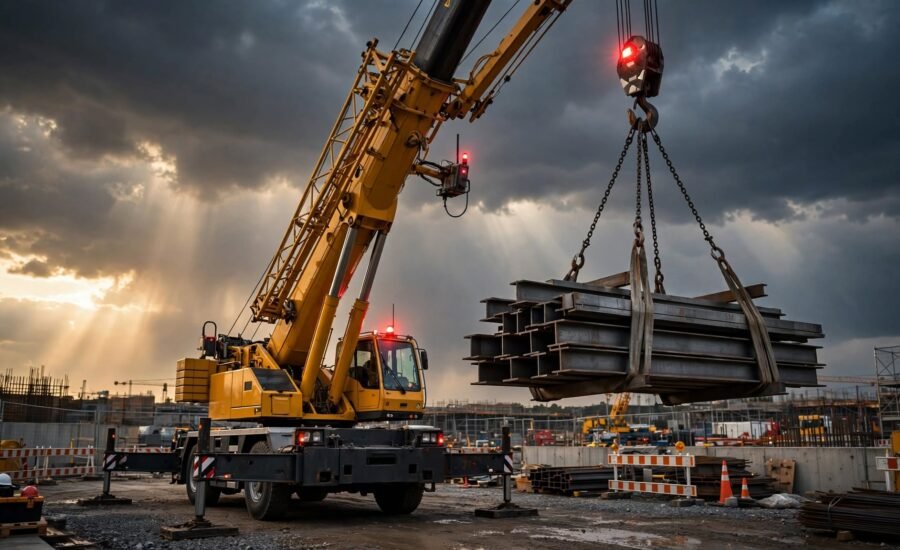
Crane overload is a deadly situation. It happens when you lift too much weight. It happens when you extend the boom too far. It happens when you ignore load charts. It causes structural failure. It causes tip-overs. It causes dropped loads. It kills workers. It destroys equipment. It ruins projects. This guide covers crane overload warning signs. This guide gives you 5 critical signs. It is preventable. It requires operator awareness. It demands constant vigilance. Read this crane overload guide completely. Apply these crane overload warnings every day. Your awareness saves lives.
Table of Contents
- 1. Sign 1: Unusual Boom Deflection or Bowing
- 2. Sign 2: Alarms and Warning Systems Activating
- 3. Sign 3: Outrigger Settlement or Crane Tilting
- 4. Sign 4: Unusual Sounds and Vibrations
- 5. Sign 5: Load Chart Discrepancies
- 6. Additional Prevention Practices
- 7. Real-World Consequences
- 8. Conclusion
- Our Business Partners
1 Unusual Boom Deflection or Bowing
The first crane overload warning sign is boom deflection. Every boom bends slightly under load. Normal deflection is minimal. Normal deflection is barely visible. Overloading causes excessive bowing. The boom curves downward noticeably. The boom bends sideways. The boom makes groaning sounds. The boom creaks under stress. These are warning indicators.
Normal Deflection vs. Warning Signs
A properly loaded unit shows slight boom flex that is uniform along its length and stays within manufacturer limits. The operator barely notices the movement, and it returns to straight when unloaded. This is normal operation, not a danger sign.
However, if the boom bends dramatically, forms a visible curve, or twists sideways, it is failing. The machine feels unstable. These are clear warning signs.
Why This Happens and What to Do
The boom has a rated capacity. Exceeding capacity overstresses the steel, causing permanent deformation. This weakened boom fails eventually. This accelerates failure. Stop the lift immediately if you see unusual deflection. Lower the load slowly, clear the area, and call an engineer. Do not use the unit until inspected.
For additional safety practices before lifting, review our crane rental 7 cost-saving tips and operation protocols.
2 Alarms and Warning Systems Activating
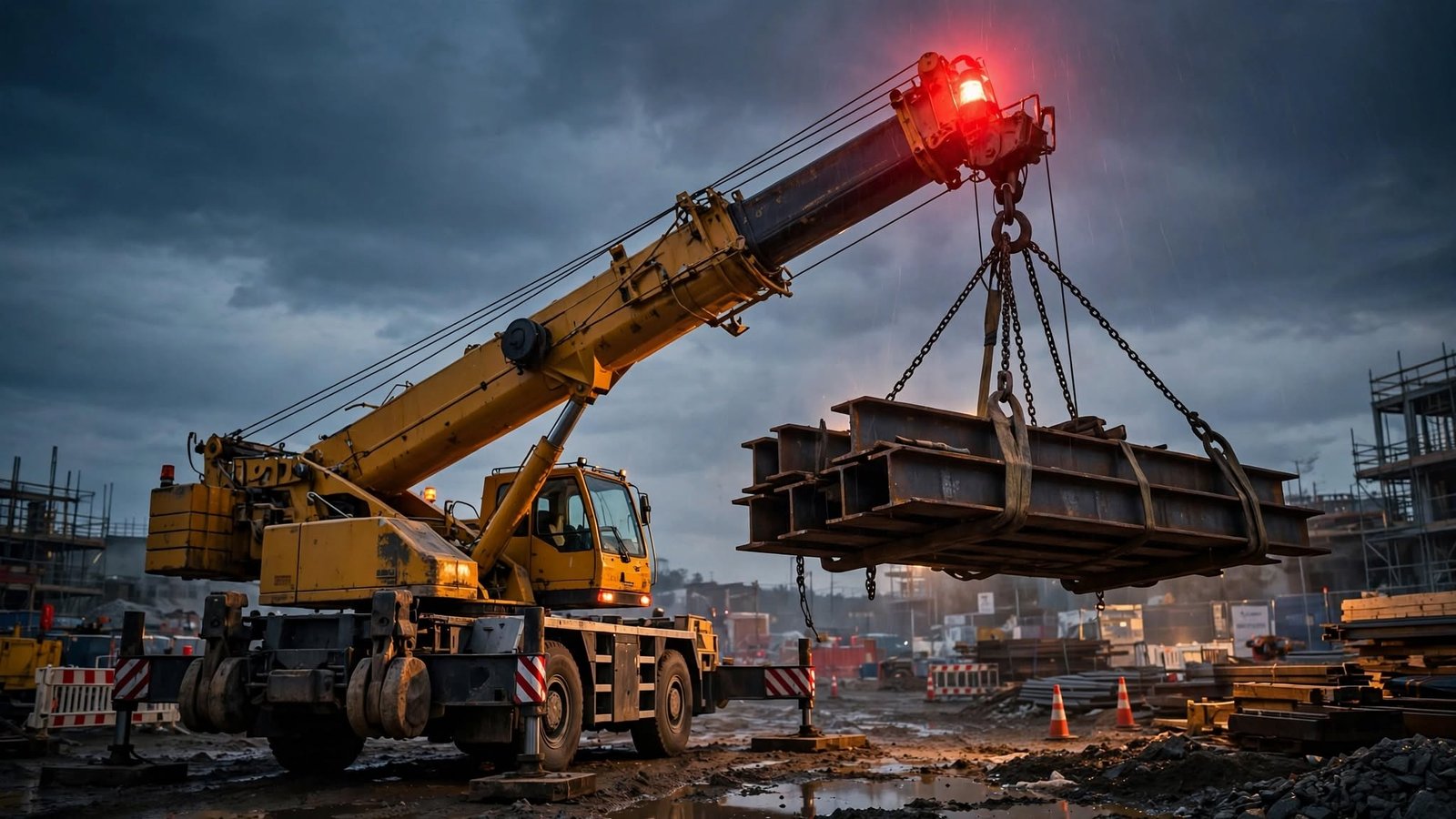
The second crane overload warning sign is system alarms. Modern lifters have load moment indicators. LMI systems monitor load conditions. LMI systems sound alarms at overload. A2B systems activate at two-blocking. Warning lights flash. Buzzer sounds. The operator must respond. These alarms are system protection.
Understanding LMI and False Alarms
The LMI display shows capacity percentage. At 85 percent, a caution light appears. At 90 percent, an audible alarm sounds. At 100 percent, the alarm becomes continuous to prevent over-stress. Do not ignore these visual, audible, or vibrating warnings. Sensors can malfunction, but do not assume the alarm is false. Stop, verify weight, radius, and boom length.
3 Outrigger Settlement or Crane Tilting
The third crane overload warning sign is outrigger settlement. Outriggers support the unit. Outriggers contact the ground. Outriggers distribute the load. Excess weight puts more pressure on outriggers. More pressure causes ground settlement. Settlement causes the machine to tilt. Tilting is a serious crane overload indicator.
What Settlement Looks Like and Why It Happens
One corner sinks, the bubble level shifts, and the pad pushes into the ground. The machine leans, creating dangerous instability. This is a classic warning sign. The load weight exceeds ground bearing capacity, causing compression. Soft soil, wet ground, sloped areas, and inadequate pads worsen these effects.
What to Do
Monitor the bubble level constantly. Stop the lift if you see settlement. Lower the load immediately. Do not try to reposition under load. Improve ground conditions before resuming to prevent crane overload.
If you need to quickly grade or stabilize soft ground, compact equipment like the TYPHON STOMP X1300 Mini Skid Steer Loader is highly effective.
4 Unusual Sounds and Vibrations
The fourth crane overload warning sign is unusual noise. Normal sounds are consistent and smooth. Crane overload causes different sounds. Grinding, groaning, and popping occur. Vibrations increase noticeably. These are audible warnings.
Normal Sounds vs. Overstress Sounds
Engines hum steadily, hydraulics whine softly, and cables creak slightly under normal use. Conversely, when stressed, the boom pops, cables squeal, engines labor heavily, and the machine shakes. These sounds indicate over-stress.
5 Load Chart Discrepancies
The fifth crane overload warning sign is chart mismatch. The load chart shows safe lifting capacity. The current conditions must match the chart. Operator actions must match the chart. Any discrepancy creates failure risk.
Common Discrepancies and Verification
If the boom angle, length, radius, or outrigger position do not match the chart, it increases failure risk. Operators feeling rushed or guessing capacities cause over-stress. Read the chart before every lift and respect it as the final authority.
6 Additional Prevention Practices
Beyond the 5 warning signs, follow these practices. These further prevent crane overload.
Daily Review, Planning, and Communication
Review the load chart each morning. Plan every lift in advance by calculating weight and radius. Use clear hand signals and radios to communicate load weight to the operator. Clear communication prevents crane overload.
Operator Training and Load Cell Verification
Train operators on reading charts and emergency responses. Knowledgeable operators avoid crane overload. Use load cells to verify weight against shipping documents before lifting. Accurate weight data prevents crane overload.
7 Real-World Consequences
Understanding consequences reinforces caution. Crane overload consequences are severe.
Equipment Damage and Delays
Crane overload damages the boom permanently. Crane overload damages the hydraulic system and turntable bearing. Repairs cost tens of thousands, and failed equipment stops work, delaying projects.
Injuries, Fatalities, and Legal Liability
Crane overload drops loads on workers and crushes operators. Crane overload leads to lawsuits, OSHA fines, and criminal charges. You are responsible for prevention.
8 Conclusion
Crane overload is a serious safety threat. Crane overload is entirely preventable. Crane overload requires operator vigilance. Watch for these 5 warning signs. Unusual boom deflection or bowing indicates stress. Alarms and warning systems protect you. Outrigger settlement shows ground failure. Unusual sounds and vibrations signal danger. Load chart discrepancies create risk.
Respond immediately to any warning. Stop the lift, lower the load, and clear the area. Train every operator on the signs. Review this guide regularly and apply these prevention practices daily. Your awareness saves lives.
Never compromise on safety. Never ignore warnings. Never assume you are safe. Safety starts with you. Protect yourself and your team on every single lift.
9 Our Business Partners
We believe in collaborating with the best in the industry to bring unmatched value to our construction projects. Watch the video below to learn more about our operational standards and partnerships.


[…] For more critical safety insights, review our guide on crane overload warning signs. […]