
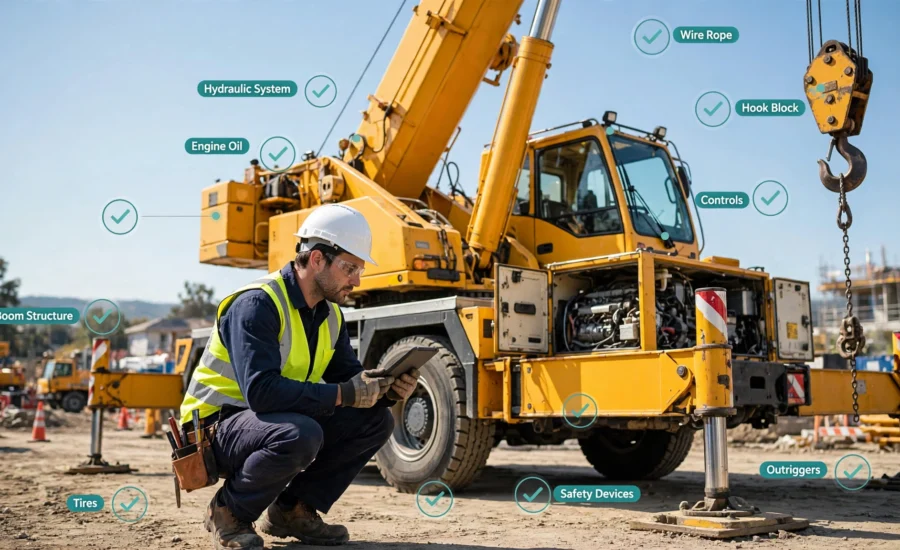
Crane maintenance keeps equipment working, prevents breakdowns, and extends service life. It reduces repair costs, improves safety, increases reliability, and saves money over time. Proper care requires daily attention, weekly checks, and monthly services. This guide covers the subject thoroughly, giving you 9 essential checks. Equipment care is not optional; it is a requirement. Read this crane maintenance guide carefully. Apply these crane maintenance checks consistently, and your equipment will last twice as long.
Table of Contents
- 1. What It Covers
- 2. Why It Matters
- 3. 1: Daily Visual Walkaround Inspection
- 4. 2: Engine Oil and Filter Service
- 5. 3: Hydraulic Fluid and Filter Service
- 6. 4: Wire Rope and Cable Inspection
- 7. 5: Outrigger and Stabilizer Service
- 8. 6: Boom and Jib Inspection
- 9. 7: Electrical System and Controls
- 10. 8: Tire and Undercarriage Service
- 11. 9: Safety Device Testing
- 12. Additional Practices
- 13. Conclusion
- Our Business Partners
1 What Crane Maintenance Covers
Equipment care includes all systems. It covers the boom structure, hydraulic components, electrical systems, engine, and drivetrain. It also covers rigging, cables, outriggers, stabilizers, safety devices, and every moving or stationary component. Comprehensive care protects the entire machine.
2 Why Crane Maintenance Matters
Equipment failure causes costly downtime, expensive repairs, safety hazards, project delays, and damages your reputation. Proper care prevents these outcomes. A well-maintained machine operates smoothly, lifts safely, and works for decades. It is a wise investment.
The Cost of Neglect
Ignoring upkeep leads to failure. A failed machine costs thousands to repair, more to replace, injures workers, causes lawsuits, and stops production. These costs far exceed upkeep expenses. Regular upkeep is cheaper than emergency repairs.
3 1: Daily Visual Walkaround Inspection
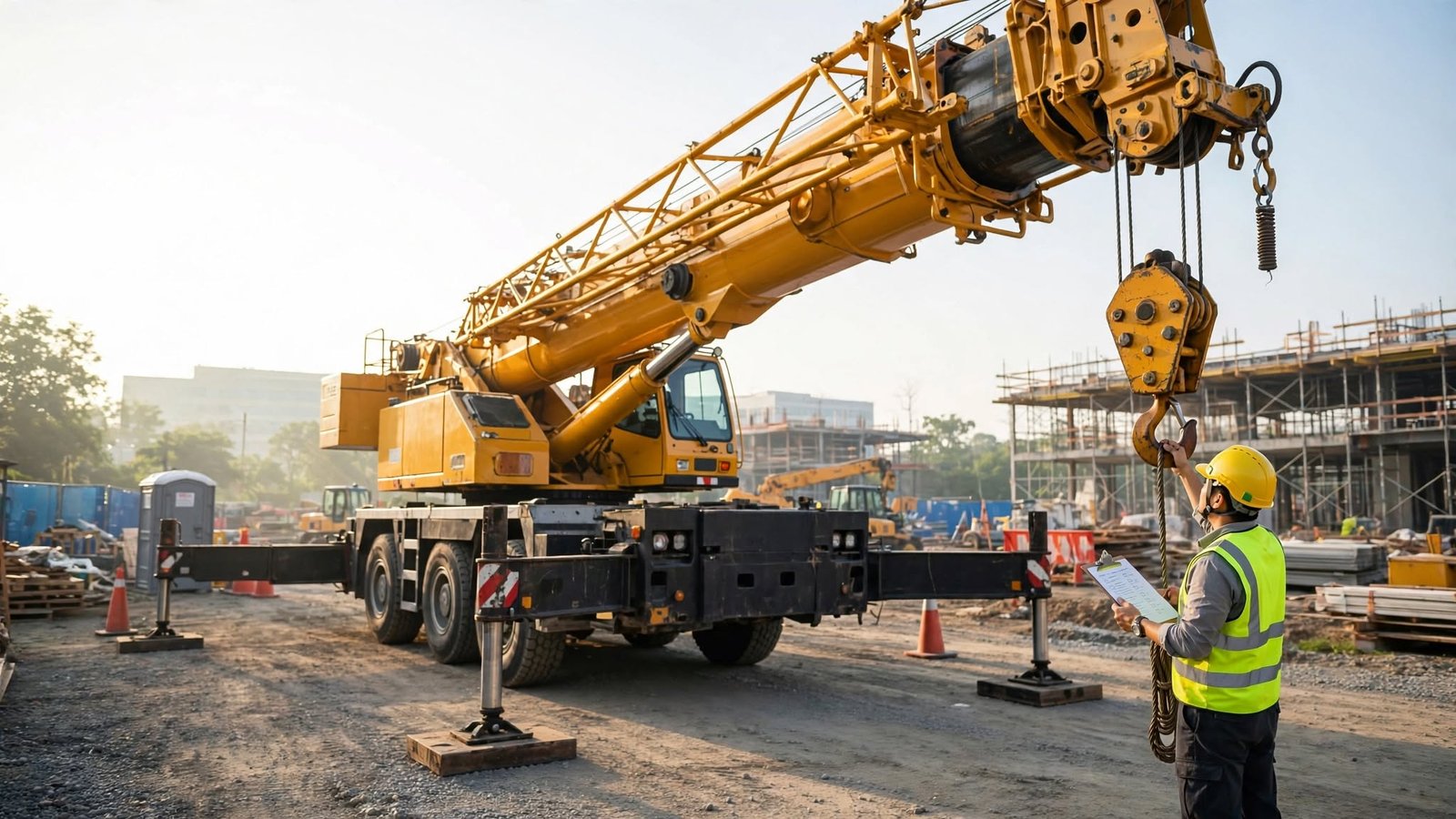
The first check is the daily walkaround. Taking just 15 minutes, this check saves thousands of dollars and prevents catastrophic failures. Perform it before starting work or after any impact. This is maintenance at its most basic.
What to Look For and Why It Matters
Walk around the machine completely. Look at the boom for dents, cracks, or rust. Check hydraulic cylinders for scoring or leaks. Inspect cables for fraying, kinks, or broken wires. Verify the hook, outriggers, tires, counterweight, bolts, pins, and hardware. Small cracks or leaks grow into big ones. Catching problems early saves money and lives. The daily walkaround is essential.
How to Make It Effective
Create a checklist, keep it in the cab, complete it each shift, sign and date it. Report and address issues immediately before work starts. Review checklists weekly and use them for training. Good documentation improves the process.
Learn more about equipment cost-saving protocols in our 7 cost-saving tips guide.
4 2: Engine Oil and Filter Service
The second check is engine oil. The engine powers the machine and must run reliably. Engine oil lubricates, cools, and cleans. Oil breaks down and gets dirty. Regular oil changes are essential.
When and How to Change Oil
Change oil every 250 or 500 hours based on manufacturer recommendations. Dusty conditions, heavy loads, or high temperatures need more frequent changes. Following the schedule is good crane maintenance. Use the recommended oil grade and viscosity, change the filters, use genuine parts, and send oil samples for analysis. Proper oil changes are critical crane maintenance.
What Oil Analysis Shows
Wear metals indicate internal damage. High iron means cylinder wear, high copper means bearing wear, high silicon means dirt ingestion, high water means a coolant leak, and high fuel means injector issues. Analysis guides crane maintenance decisions and prevents unexpected failures.
5 3: Hydraulic Fluid and Filter Service
The third check is hydraulic service. Hydraulics power every movement—raising the boom, extending it, operating outriggers, and swinging the structure. Clean fluid and proper levels are essential. Hydraulic service is vital crane maintenance.
Fluid Levels, Filters, and Sampling
Check fluid levels daily with the boom and cylinders retracted and engine off. Use the correct viscosity grade. Low fluid causes cavitation, which damages pumps and reduces power. Change return, pressure, and breather filters at specified hours to prevent overheating and wear. Sample fluid every 500 hours to test for wear metals, water contamination, and breakdown. Hydraulic sampling is advanced crane maintenance.
6 4: Wire Rope and Cable Inspection
The fourth check is wire rope. It carries every load, experiences constant stress, and can fail without warning. It must be inspected regularly and replaced when worn. Cable inspection is crucial crane maintenance.
What to Look For and How Often
Inspect the full rope length for broken wires, kinks, birdcaging, flattened sections, rust, and diameter reduction. Replace rope at 10 percent loss or with excessive broken wires. Inspect daily before use, after shock loads, and weekly for detailed checks. Regular replacement is smart crane maintenance.
Proper Cable Lubrication
Lubricate regularly to reduce internal friction, prevent corrosion, and extend service life. Clean the rope, apply a specific lubricant when the rope is slack to allow penetration. Proper lubrication is important crane maintenance.
7 5: Outrigger and Stabilizer Service
The fifth check is outrigger service. Outriggers stabilize, level, and prevent tipping. They must function perfectly; failure causes accidents. Outrigger service is essential crane maintenance.
Inspecting Beams, Cylinders, and Pads
Look for cracks, rust, straightness, and smooth extension on beams. Inspect cylinders for leaks, scratches, or pitting, and extend/retract them to feel for smooth movement. Check pads for cracks and wear, and replace damaged ones immediately. Pad condition affects safety.
8 6: Boom and Jib Inspection
The sixth check is boom service. The boom does the lifting, takes the most stress, and must be structurally sound. Boom failure is catastrophic. Boom inspection is critical crane maintenance.
Visual Boom, Cylinder, and Jib Inspection
Inspect each section for dents, cracks, rust, scoring, or wear. Check telescopic cylinders for leaks or scratches. Extend and retract slowly to listen for unusual noises. Inspect the jib attachment, pivot pins, locking mechanism, sheaves, bearings, and cables. Jib inspection is important crane maintenance.
If trenching or tight-space earthmoving is needed alongside your lifts, a compact machine like the TYPHON Terror X2 Max Canopy Mini Excavator provides reliable support.
9 7: Electrical System and Controls
The seventh check is electrical service. Electrical systems control operations, power sensors, and enable communication. Failure stops work. Electrical inspection is essential crane maintenance.
Battery, Wiring, and Control Verification
Check battery terminals for corrosion, fluid levels, and cable damage. Inspect wiring for frayed or chafed sections, loose connections, or overheating. Test every control function, emergency stop buttons, LMI, A2B, warning lights, and alarms. Control testing is vital crane maintenance.
10 8: Tire and Undercarriage Service
The eighth check is tire service. Tires support the machine, provide traction, and absorb shock. Tire failure causes accidents. Tire inspection is important crane maintenance.
Tire Pressure, Condition, and Hardware
Check tire pressure daily. Look for cuts, bulges, embedded objects, or uneven tread wear. Measure tread depth and rotate or replace as recommended. Check wheel lug nuts, studs, and rims for damage.
11 9: Safety Device Testing
The ninth check is safety testing. Safety devices protect everyone and prevent accidents. They must work perfectly. Safety device testing is critical crane maintenance.
LMI, A2B, and Emergency Stop Testing
Test the LMI system daily for proper readings and alarms. Test the A2B system to confirm the hoist stops automatically before contact. Test all emergency stop buttons and confirm they shut down operations. Test warning lights and audible alarms. Working warnings prevent accidents.
12 Additional Practices
Beyond the 9 checks, follow seasonal care practices (winter/summer preparations), use genuine manufacturer parts, and keep detailed records of every action. This further improves crane maintenance.
13 Conclusion
Proper equipment care extends service life, reduces repair costs, improves safety, and prevents breakdowns. Perform these 9 essential checks: complete daily visual walkarounds, change engine oil and filters, service hydraulic systems, inspect wire ropes, maintain outriggers, service the boom and jib, check electrical systems, inspect tires, and test safety devices daily.
Such care is an investment that pays dividends. Well-maintained equipment lasts twice as long, operates safely, and earns more revenue. Apply these practices today, train your team, and review this guide regularly. Your equipment will reward you, profits will increase, and safety will improve. Crane maintenance is the key to success.
14 Our Business Partners
We believe in collaborating with the best in the industry to bring unmatched value to our construction projects. Watch the video below to learn more about our operational standards and partnerships.


[…] deepen your understanding before exams, read our crane maintenance 9 essential checks guide to master daily […]